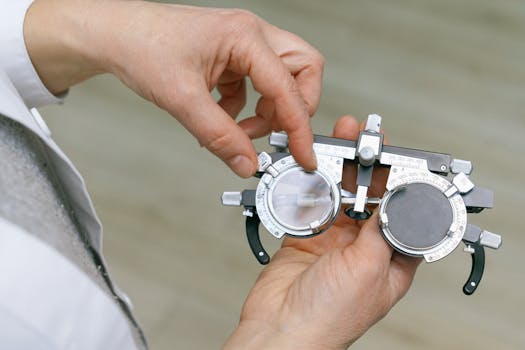
Imagine a future where diseases are detected before symptoms even appear, where surgical procedures are performed with microscopic precision, and where the very act of diagnosis is as simple as looking at an image. This isn’t science fiction; it’s the rapidly unfolding reality shaped by medical vision technology. For decades, vision in medicine has primarily meant the human eye of a skilled clinician. However, we’re now witnessing a profound paradigm shift, where artificial intelligence, advanced imaging, and sophisticated optics are augmenting, and in some cases, even surpassing, human visual capabilities within the healthcare landscape.
The sheer volume of visual data generated in healthcare is staggering – think of countless X-rays, CT scans, MRIs, endoscopic videos, and microscopic slides. Traditionally, interpreting this deluge of information has been a monumental task, heavily reliant on the expertise and time of medical professionals. But what if we could empower these professionals with tools that see more, see faster, and see with unprecedented accuracy? That’s precisely where the transformative power of medical vision technology comes into play.
Seeing the Unseen: AI’s Diagnostic Superpowers
Perhaps the most revolutionary aspect of medical vision technology lies in its ability to enhance diagnostic accuracy and speed. Artificial intelligence, particularly deep learning algorithms, excels at pattern recognition. When trained on vast datasets of medical images, these AI systems can identify subtle anomalies that might be missed by the human eye, especially in the early stages of a disease.
For instance, in radiology, AI can now flag potential cancerous nodules on lung CT scans or detect diabetic retinopathy in retinal images with remarkable efficacy. This doesn’t replace the radiologist or ophthalmologist, but rather acts as a powerful co-pilot, highlighting areas of concern and allowing clinicians to focus their attention where it’s most needed. It’s akin to giving doctors a magnifying glass that can also read the fine print, speeding up the diagnostic process and potentially catching conditions at a point where treatment is most effective. In my experience, the early integration of such tools has already led to more efficient workflows and, more importantly, earlier interventions for patients.
Sharpening the Surgical Edge: Precision Robotics and Endoscopy
The operating room is another frontier where medical vision technology is making indelible marks. Minimally invasive surgery, a cornerstone of modern surgical practice, relies heavily on high-definition cameras and advanced visualization techniques. Endoscopes, once rudimentary tools, now provide surgeons with crystal-clear, magnified views of internal anatomy, allowing for complex procedures through tiny incisions.
Furthermore, the integration of robotic surgery systems has elevated this to new heights. These robots, controlled by surgeons, offer enhanced dexterity, tremor reduction, and a 3D, high-definition view of the surgical field. This combination of robotic precision and advanced visual feedback enables surgeons to perform intricate maneuvers with unparalleled accuracy, leading to shorter recovery times, reduced scarring, and fewer complications for patients. It’s truly astonishing to witness the delicate dance between human control and robotic precision, all guided by sophisticated visual data.
Beyond Diagnosis: Therapeutic Applications and Future Frontiers
The impact of medical vision technology extends beyond mere detection and intervention. Researchers are exploring its use in guiding therapeutic interventions, such as targeted drug delivery or precise radiation therapy. Imagine a future where treatments are not only tailored to an individual’s genetic makeup but also guided by real-time visual feedback, ensuring maximum efficacy and minimal collateral damage.
We’re also seeing innovations in augmented reality (AR) and virtual reality (VR) applied to medical training and even intraoperative guidance. Surgeons can practice complex procedures in a risk-free virtual environment, honing their skills before operating on actual patients. During surgery, AR can overlay critical patient data, such as anatomical structures or tumor margins, directly onto the surgeon’s view of the patient, enhancing situational awareness. The potential for these immersive technologies to democratize high-level medical training and improve patient outcomes is immense.
Navigating the Challenges and Embracing the Future
Despite the incredible progress, the widespread adoption of medical vision technology isn’t without its hurdles. Data privacy and security are paramount concerns, especially with the increasing digitization of patient information. Ensuring the interpretability and reliability of AI algorithms is also crucial; we need to understand why an AI makes a particular recommendation, not just what it recommends. Furthermore, the integration of these new technologies requires significant investment in infrastructure and ongoing training for healthcare professionals.
However, the trajectory is clear. The synergy between human expertise and advanced vision systems promises a future where healthcare is more personalized, precise, and accessible. As we continue to refine these tools and overcome the associated challenges, we’re not just enhancing our ability to see; we’re fundamentally improving our capacity to heal.
The Patient’s Perspective: A New Era of Understanding
For patients, this evolution means a future where diagnoses are made faster and more accurately, leading to earlier and more effective treatments. It means undergoing procedures that are less invasive and more precise, with quicker recovery times. It signifies a healthcare system that is continuously learning and adapting, leveraging the best of human intellect and technological innovation to improve well-being. The integration of sophisticated visual analysis tools into routine care underscores a commitment to patient safety and optimal outcomes.
Wrapping Up: Your Role in Embracing Innovation
The landscape of healthcare is being redrawn by the remarkable capabilities of medical vision technology. To truly harness its potential, we must foster collaboration between technologists, clinicians, and policymakers, ensuring ethical development and equitable access. As a patient or healthcare advocate, staying informed about these advancements and engaging in discussions about their implementation can empower us all to contribute to a healthier future.